“First we shape our buildings, and afterwards our buildings shape us.” – Winston Churchill.
That quote feels especially true when we talk about the history of Modular buildings. From temporary wooden huts and prefabricated homes to today’s sleek, energy-efficient structures, modular construction has always been about solving urgent needs quickly — while shaping the way communities live, work, and learn.
At Modulek, we are part of that story. Our permanent modular buildings are designed for Schools, Hospitals, sport facilities, and Businesses across the UK. But to understand why modular design is such a powerful solution today, it helps to step back and see where it all began.
Early Milestones in Modular Construction
The history of Modular buildings stretches back further than most people think. It didn’t start in the 20th century. It began in the 1800s, with bold experiments that challenged the limits of construction at the time.
The Crystal Palace, 1851
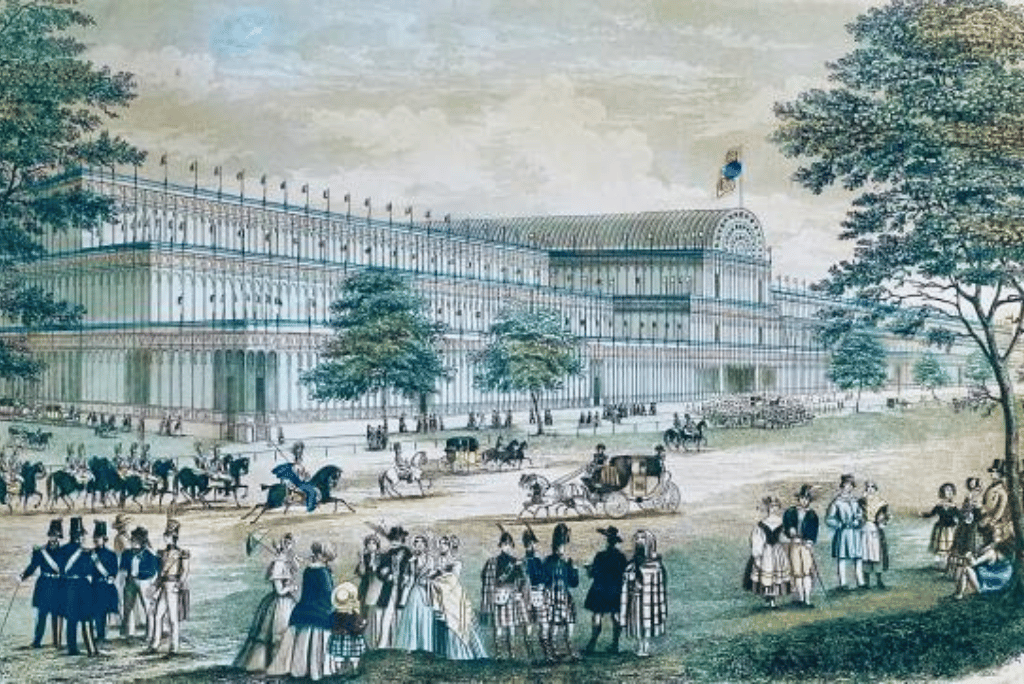
In 1851, London hosted the Great Exhibition in Hyde Park. To showcase Britain’s industrial power, architect Joseph Paxton designed the Crystal Palace — a structure made from prefabricated iron, wood, and glass. Unlike traditional masonry, the components were manufactured off-site and assembled rapidly. The result? A massive, dazzling space completed in record time.
This was the first time the public saw the potential of modular ideas: light materials, flexible design, and speed without losing grandeur.
The Sears Mail-Order Homes
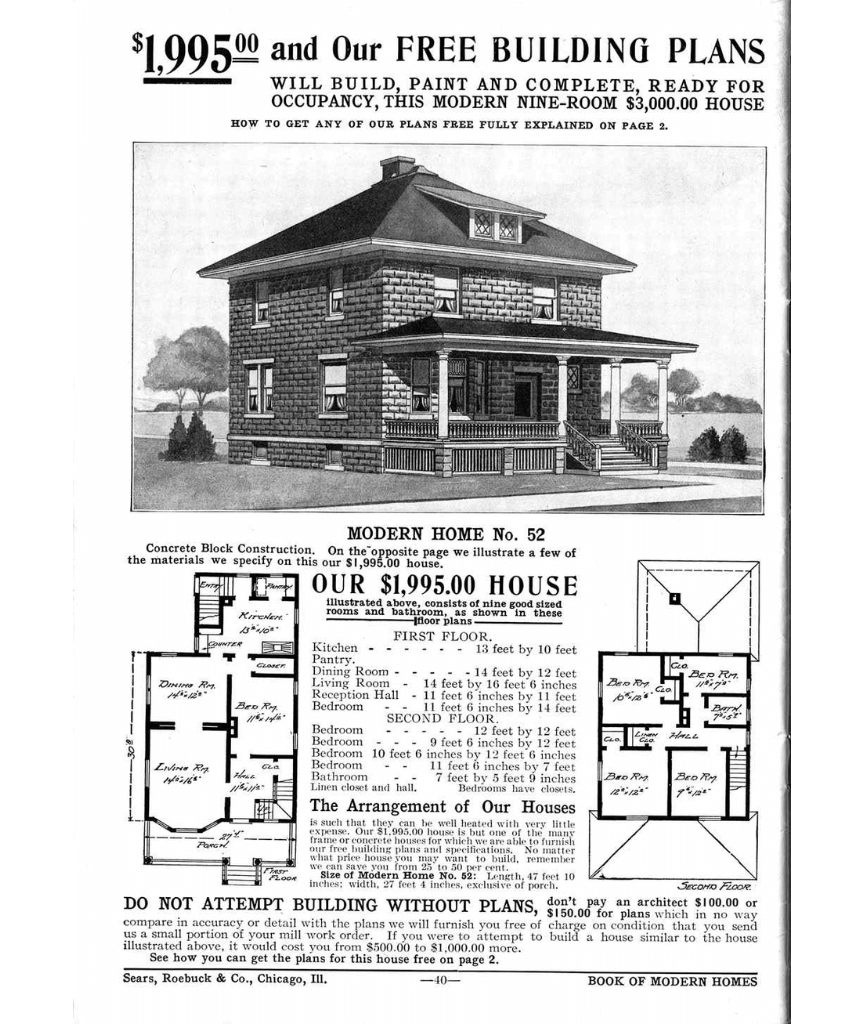
Fast forward to the early 1900s. The Sears Roebuck Company in the United States began selling prefabricated houses via catalogues. Families could literally order a home by post, and a kit of parts would arrive by train. With simple instructions, locals could assemble full houses within weeks.
For working-class families, this meant home ownership became attainable for the first time. It was the ultimate flat-pack solution — long before IKEA!
World War II Prefabs
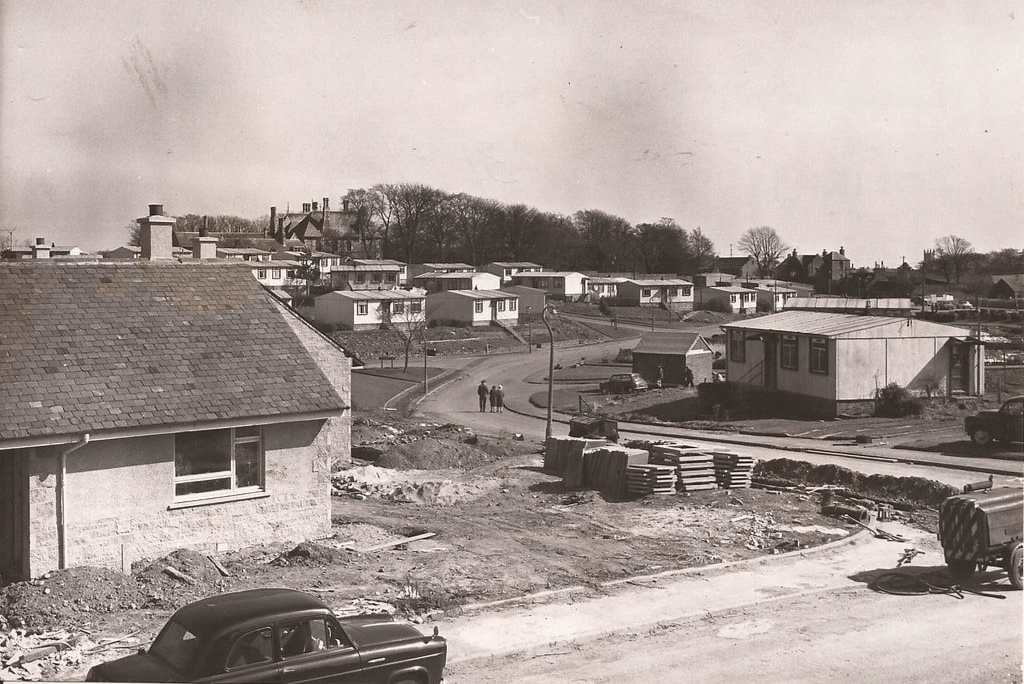
During World War II, the demand for rapid accommodation exploded. Governments needed barracks, mess halls, and housing for military personnel that could be shipped worldwide. The solution? Lightweight prefabricated structures that could be quickly erected anywhere.
After the war ended, that same principle was applied to civilian life. Across Britain, “prefabs” became a common sight as thousands of families were rehoused in modular accommodation. Schools, health clinics, and temporary offices soon followed, demonstrating that modular wasn’t just about emergencies — it was about meeting the daily needs of communities.
A Pioneering Moment: Brunel’s Modular Hospital
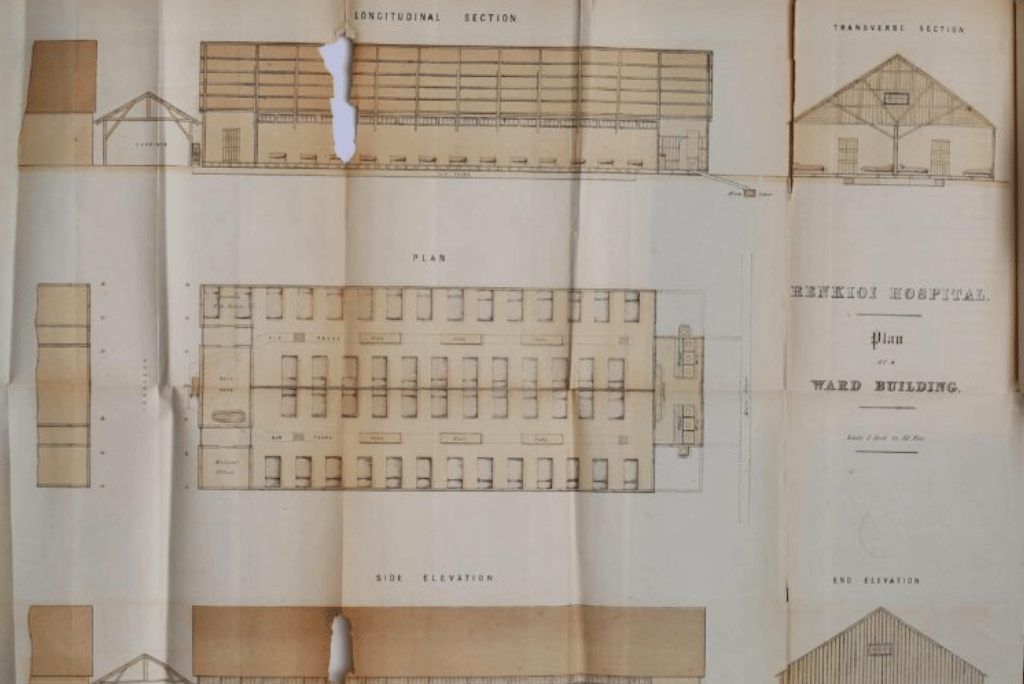
One of the most fascinating stories in the history of Modular buildings involves Isambard Kingdom Brunel. In 1855, during the Crimean War, British soldiers were suffering in shocking conditions. Florence Nightingale wrote passionately about the crisis, calling for immediate reform.
The War Department turned to Brunel, one of Britain’s greatest engineers. He was tasked with designing a hospital that could be shipped overseas, assembled fast, and serve hundreds of patients.
Brunel’s design was revolutionary. Entire hospital wards, operating theatres, and sanitary systems were prefabricated in the UK. Within five months, the modular hospital was shipped to Turkey and assembled at Renkioi.
The impact was immediate. Patient survival rates soared. This was proof that modular methods weren’t just convenient — they could save lives.
Post-War Expansion and Innovation
Between the 1950s and 2000s, modular methods moved from being a temporary fix to becoming a mainstream option. Governments, schools, and businesses realised that modular offered something traditional construction could not: flexibility.
Schools and Education
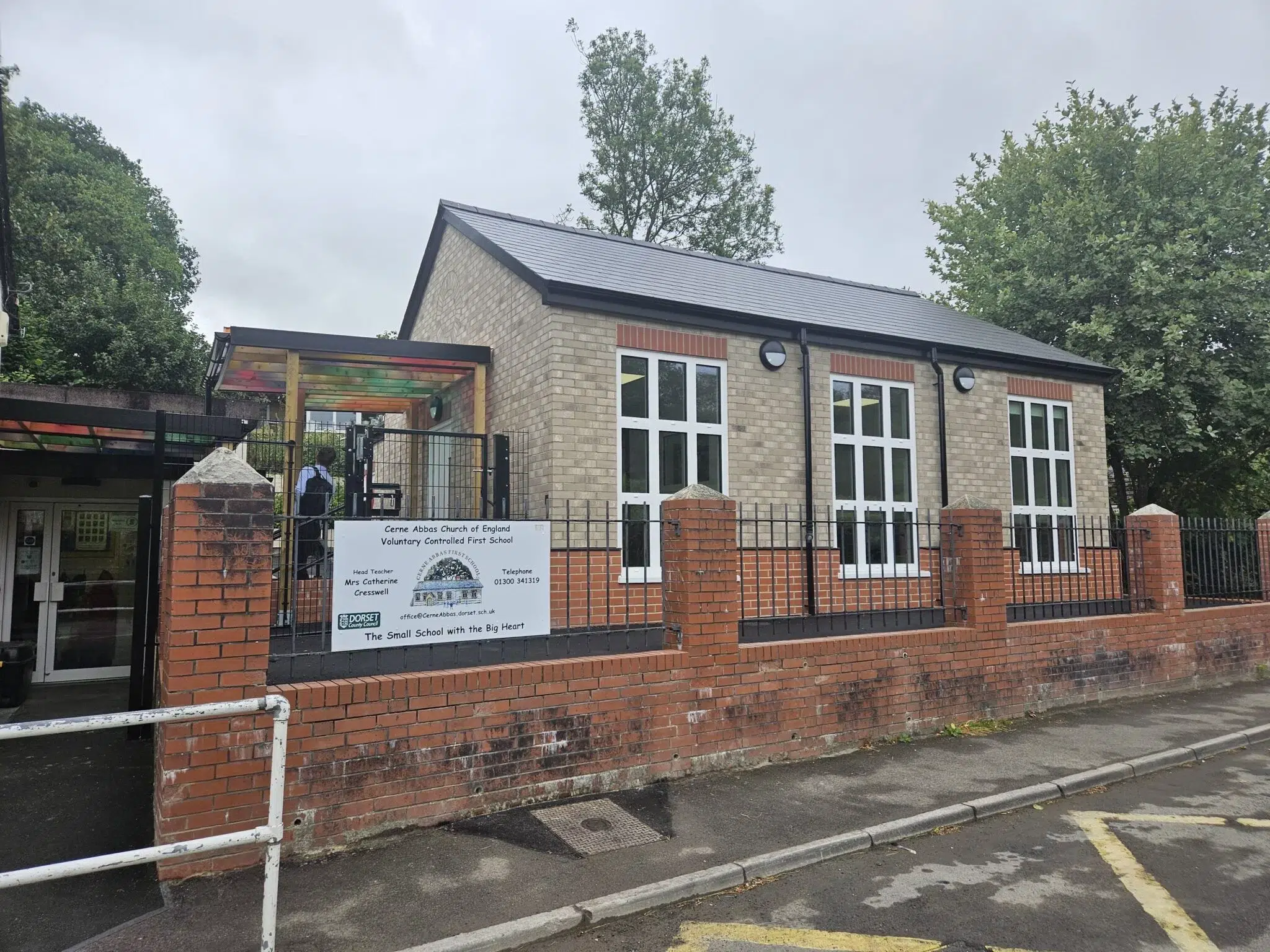
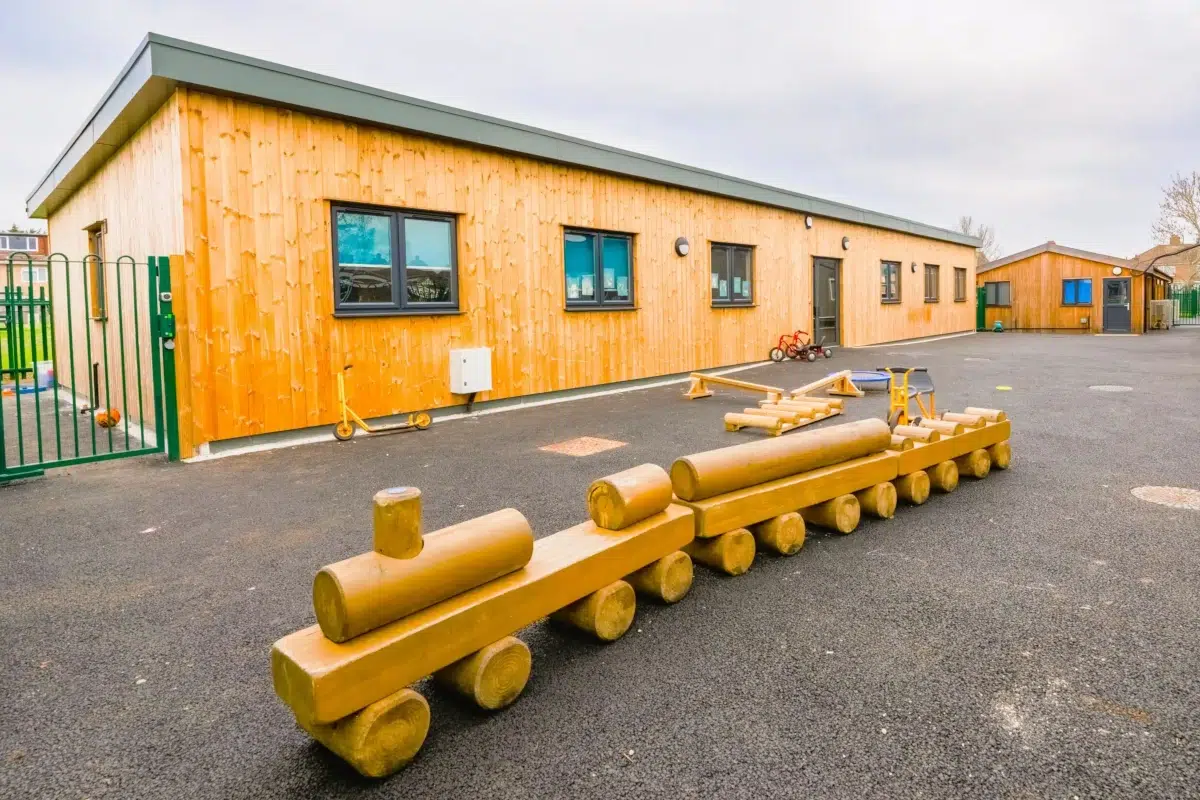
As the baby boom took hold, schools were overwhelmed. Local authorities urgently needed new classrooms and halls. Modular solutions provided fast, affordable facilities, allowing schools to expand quickly without years of waiting for brick-and-mortar builds.
Healthcare and Hospitals
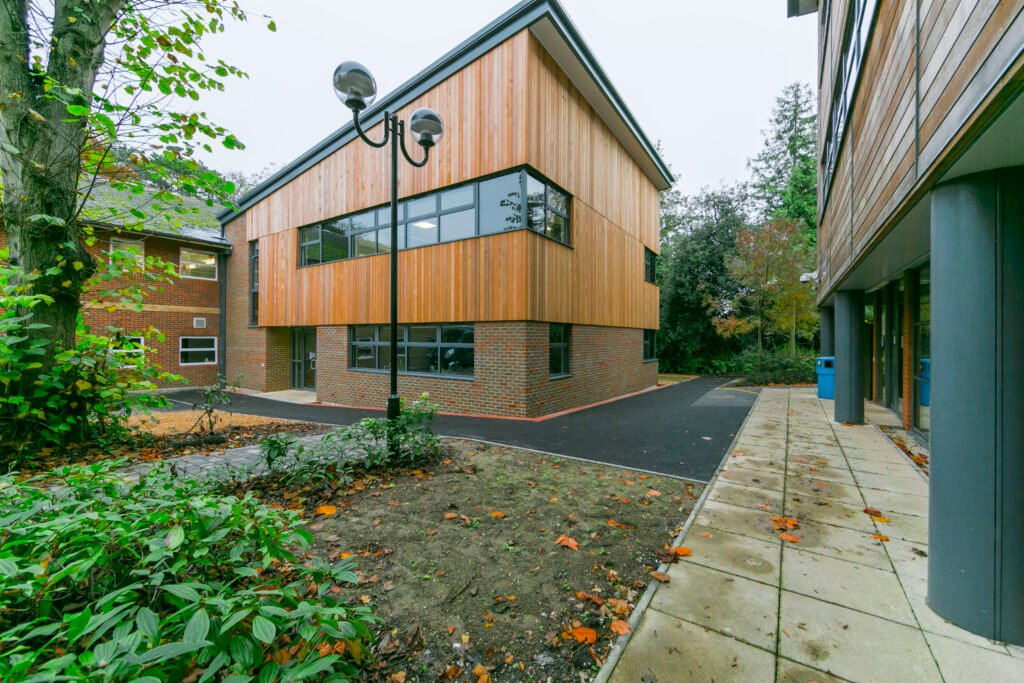
Healthcare infrastructure also leaned heavily on modular techniques. From temporary clinics to permanent hospital wings, prefabricated wards could be delivered in months instead of years. In fact, many Hospitals today still use modular extensions to add capacity without shutting down vital services.
Businesses and Offices
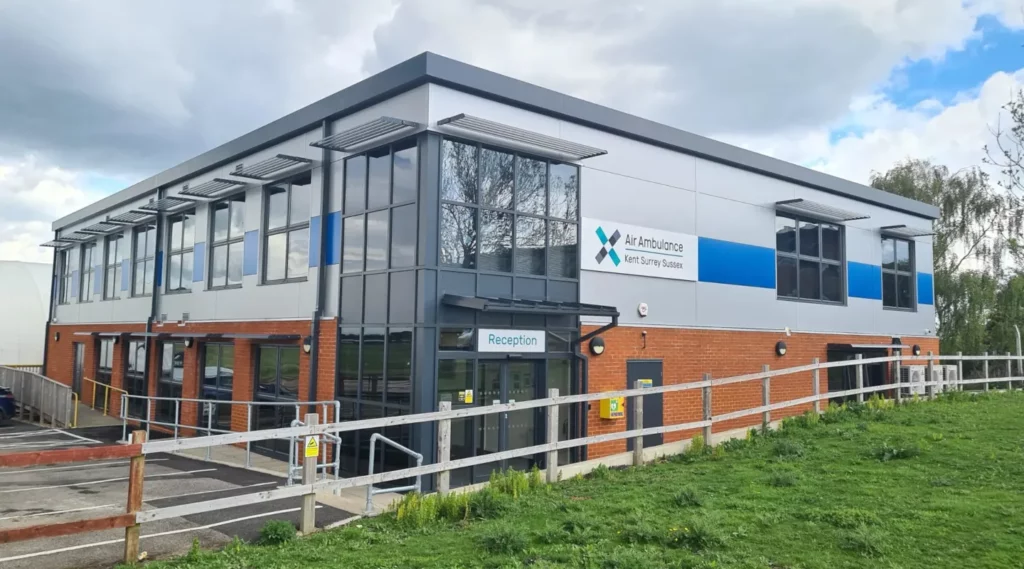
In the commercial world, modular design provided offices and warehouses that grew with a company. Instead of being locked into a fixed footprint, Businesses could add or reconfigure space as needed. That adaptability is still one of the biggest strengths of modular solutions today.
Sport Facilities and Leisure
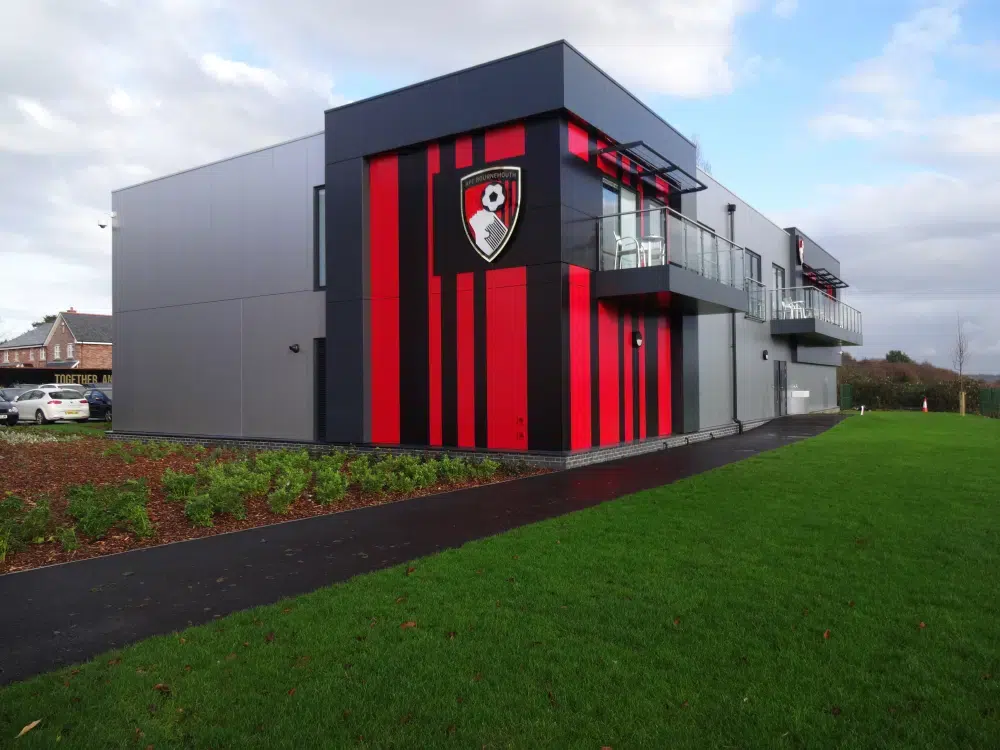
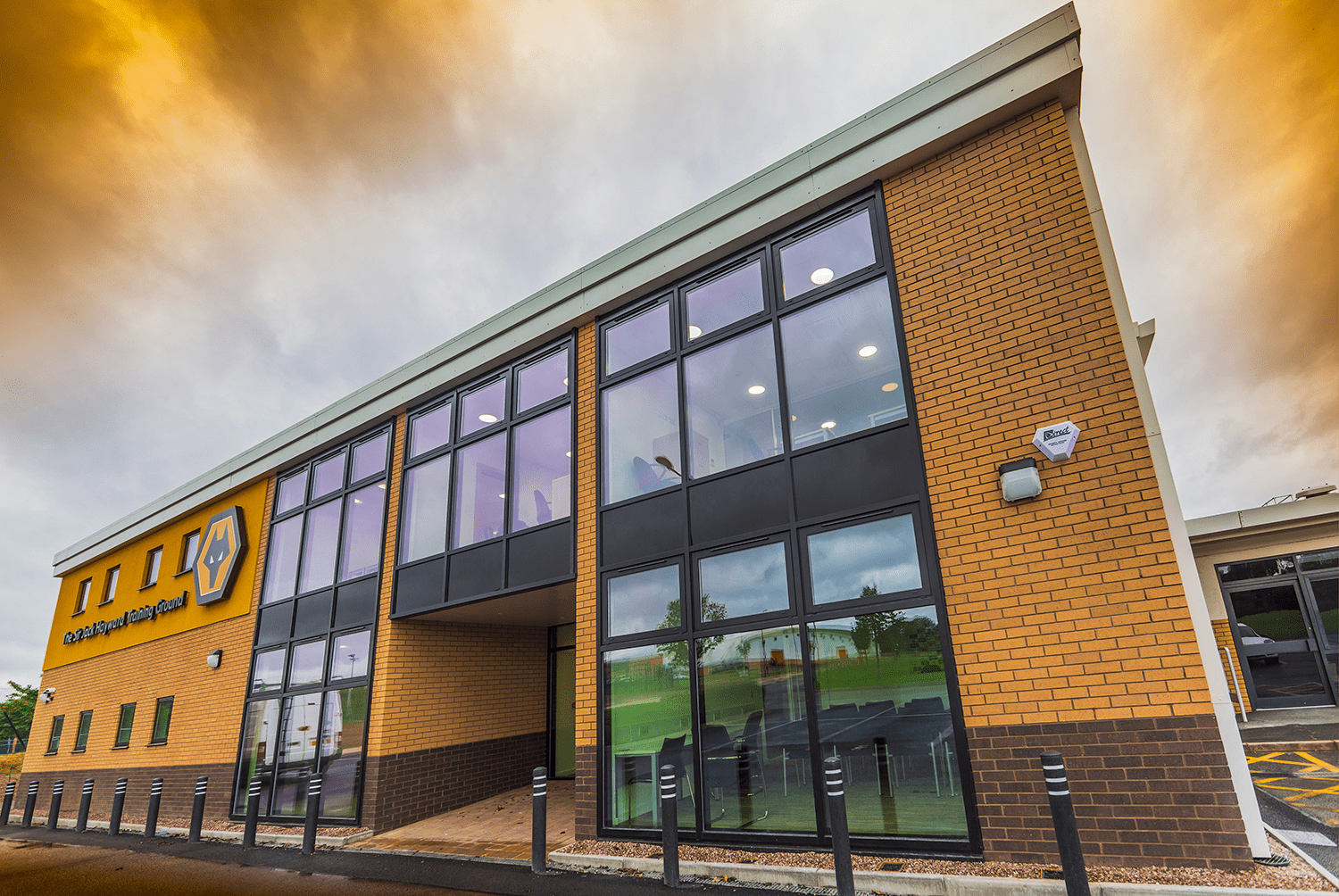
Sports and leisure centres also benefited. From community gyms to clubhouses, modular builds provided durable, attractive sport facilities that supported growing demand for recreation.
By the early 2000s, the stigma of modular as “cheap and temporary” was fading. Materials had improved, design options expanded, and lifespan increased dramatically. Modular was no longer second-best. It was a rival to traditional construction in every sense.
Modern Modular Construction
Today, the history of Modular buildings has reached a turning point. Modern off-site construction has grown into a global industry worth billions. Why? Because it answers the most pressing demands of our age: sustainability, cost efficiency, and speed.
Sustainability
Modern modular buildings use sustainable materials and advanced insulation to cut energy costs. Green heating and ventilation systems reduce environmental impact. For many clients, modular is the ethical choice as well as the practical one.
Design Aesthetics
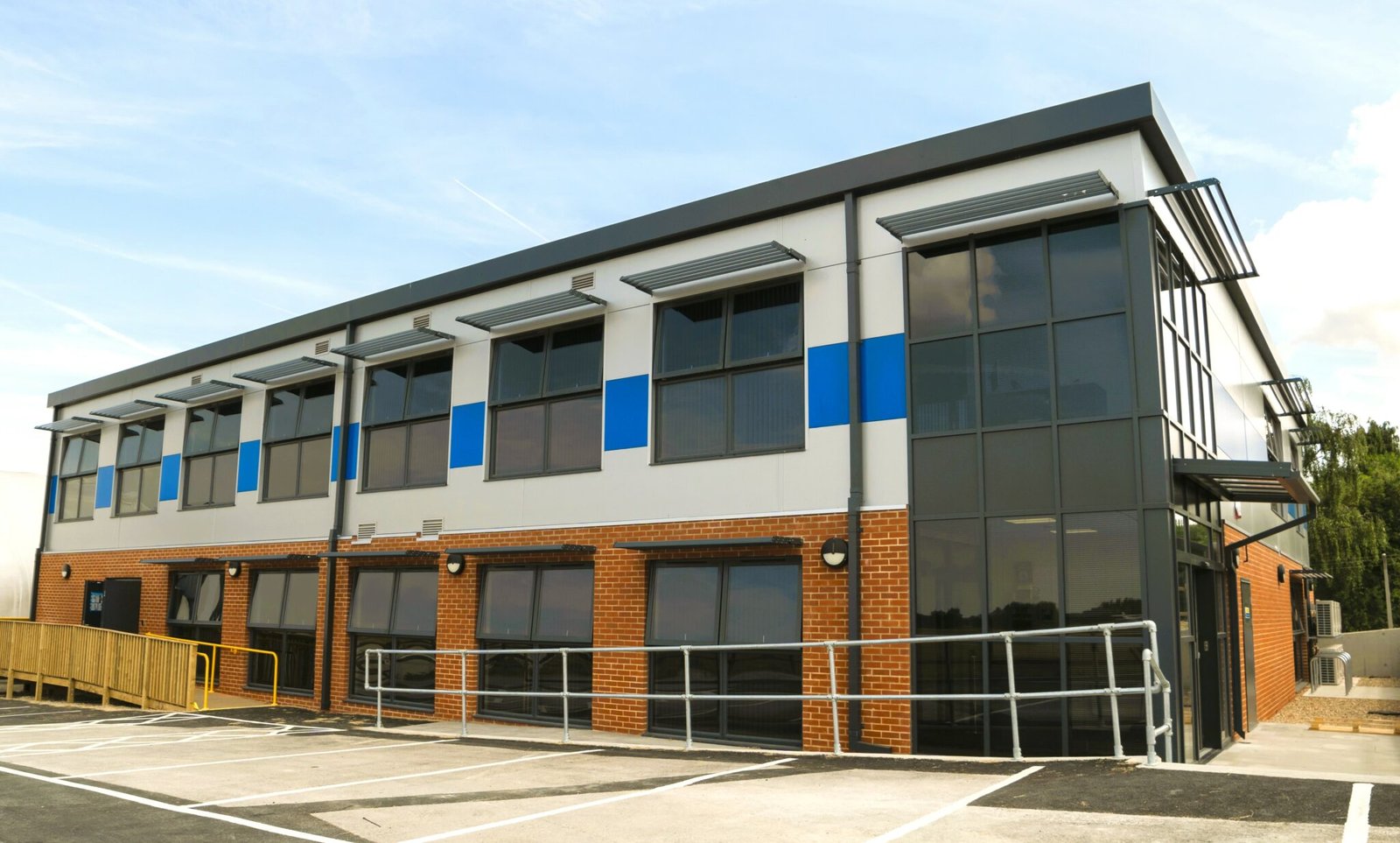
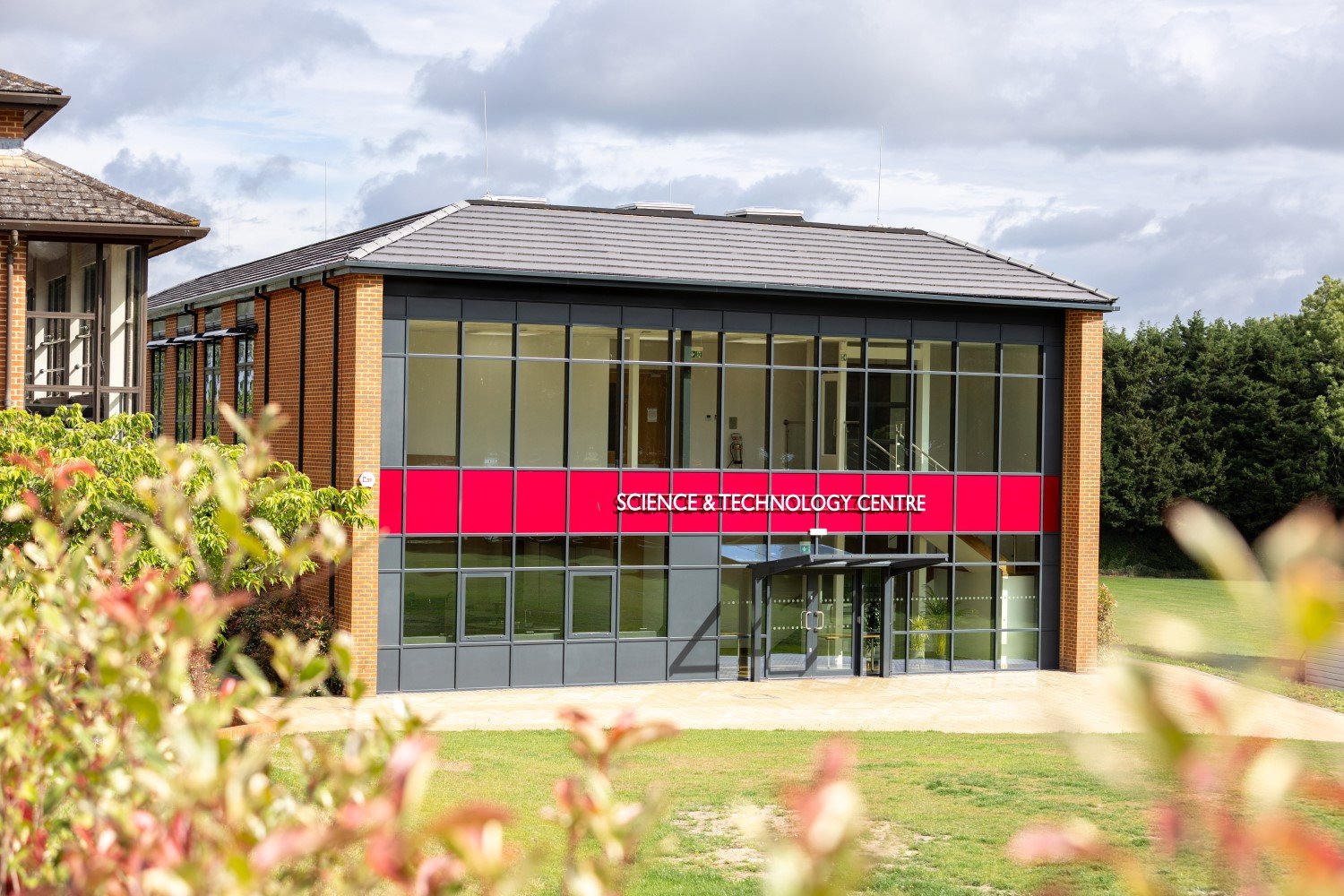
Gone are the days of boxy, identical units. Today, modular can mean sleek glass facades, timber cladding, or bold, modern contrasts. Any rainscreen cladding can be applied, so modular blends seamlessly into historic neighbourhoods or stands proudly as a contemporary landmark.
Lifespan and Quality
Permanent modular buildings now match traditional methods in durability. With a 60-year structural design life, these buildings aren’t temporary solutions — they’re here to stay. In many cases, modular outperforms traditional builds thanks to precision manufacturing in controlled environments.
Why Modular Works for Communities
When you step back and look at the history of Modular buildings, a clear pattern emerges. Modular solutions always appear when communities need them most.
- After the war, they provided shelter.
- In times of population growth, they created schools.
- During industrial booms, they delivered offices and warehouses.
- And in today’s world, they answer the call for sustainability and speed.
For parents juggling work and family, this matters. Think about it: a new nursery wing for your child’s school, delivered in a single term instead of two years. A hospital extension is ready in months to handle a surge in patients. A community sports centre built in half the time, so your kids have somewhere safe to play. That’s the everyday impact of modular construction.
The Modulek Approach
At Modulek, we are proud to continue this story. Having delivered over 120 permanent modular buildings across the UK, we specialise in Schools, Health centres, sports facilities, and commercial projects.
Our process is simple but powerful:
- Consultation – We work with you to understand your needs and vision.
- Design – Our team develops detailed plans tailored to your site and requirements.
- Prefabrication – Components are manufactured in controlled environments for maximum precision.
- Assembly – Buildings are delivered and installed quickly, minimising disruption to your daily life.
The result? A bespoke modular solution that is fast, sustainable, and built to last.
Looking Ahead: The Future of Modular
The future of modular isn’t about replacing traditional construction. It’s about expanding possibilities. As materials evolve and digital design advances, modular methods will create even smarter, greener, and more adaptable buildings.
We believe modular will play a crucial role in tackling some of the biggest challenges facing society — from affordable housing to sustainable healthcare infrastructure.
Final Thoughts
The history of Modular buildings tells a powerful story. From the Crystal Palace to Brunel’s hospital, from wartime prefabs to modern schools and Hospitals, modular has always been about more than just speed. It’s about meeting urgent needs with creativity, efficiency, and care.
At Modulek, we carry that legacy forward. We build permanent modular solutions that serve communities, empower Businesses, and support families. With each project, we prove that modular construction isn’t just part of history — it’s the way forward.