IRisk has a way of appearing when you least expect it. One moment your plans look straightforward, then a cost jumps, a deadline slips, or a critical detail changes. wE have seen it happen repeatedly. When it comes to building plan risks, every organisation, regardless of sector, needs a clear approach that reduces uncertainty and strengthens decision making. The good news is that thoughtful planning gives you far more control than you might think.
Some projects feel smooth from the start. Others challenge you at every turn. Both experiences have value, and both become easier when you understand how to manage risk before the building work begins.
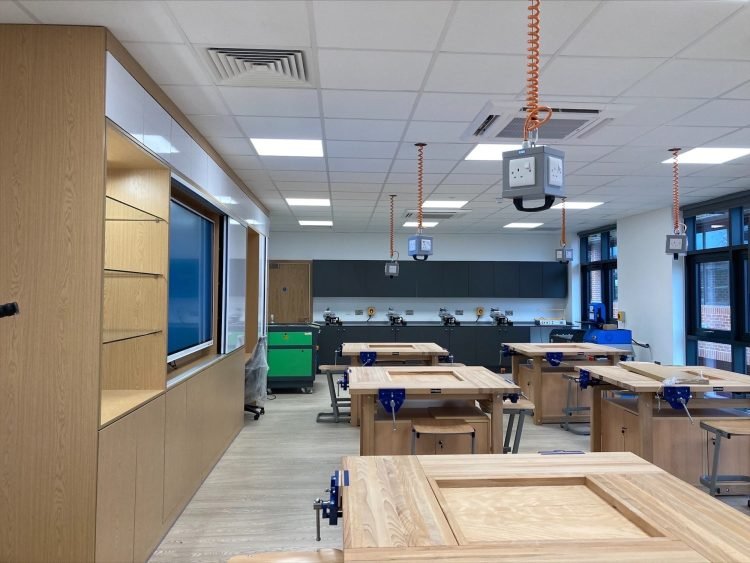
we wanted a company, not only to provide us with an outstanding building and within a defined budget, but also to understand the background to the project. on all three counts, modulek delivered and, additionally, absolutely on time.
headteacher
all saints academy
Understanding Building Plan Risks in an Unpredictable Environment
Every industry is facing pressures. Commercial businesses are watching budgets closely. Public sector organisations are dealing with increased accountability. Community institutions must adapt to rising demand. And many teams are trying to do more with less. In times like these, building plan risks can have a bigger impact than ever.
Without proper planning, small issues can turn into larger obstacles that delay projects, increase costs or jeopardise the wider strategy. The aim of this guide is to give you a clearer understanding of the practical steps that help reduce those risks upfront and support smoother delivery.
Common Risks That Affect All Types of Building Projects
Different sectors face different pressures, but the underlying risks remain remarkably consistent. These are the issues organisations encounter most often:
- Planning and approval delays
- Budget overruns
- Changes in project scope
- Incomplete feasibility work
- Uncertain ground conditions
- Supply chain instability
- Poor communication between stakeholders
- Misaligned timelines
- Insufficient contingency funding
- Gaps in compliance or regulatory planning
Understanding these helps organisations create a clear path through construction planning risks and take action before challenges arise.
Let’s look at three strategic approaches that help minimise exposure in almost any setting.
Reconfiguration: Reducing Building Plan Risks Through Smarter Use of Space
Reconfiguring an existing site can be one of the most effective ways to manage building plan risks. It allows you to work with what you already have while creating space for growth.
Why Reconfiguration Supports More Predictable Outcomes
Reconfiguration helps to:
- Avoid unnecessary demolition
- Reduce the volume of new construction
- Phase work in smaller, manageable stages
- Minimise disruption to daily operations
- Lower the likelihood of large cost deviations
For many organisations, reconfiguration is the quickest way to increase capacity, adapt to demand and protect budgets.
Segmentation: Creating Focused, Purpose Built Areas That Control Risk
Segmentation is the process of designing dedicated spaces for specific functions. It strengthens your project by ensuring each area is built to meet clear operational requirements.
Why Segmentation Improves Planning Accuracy
Purpose built spaces reduce building plan risks because they:
- Align directly with defined objectives
- Limit design uncertainty
- Improve user experience
- Support long term value
- Simplify regulatory approval
Whether you operate a commercial team, community service, training facility or innovation space, segmentation helps you future proof your environment.
Diversification: Expanding What Your Estate Can Do
Diversification expands the use of your estate to provide additional services, revenue or community value. It unlocks flexibility that can protect you from economic shifts.
Why Diversification Lowers Risk and Strengthens Strategy
Diversifying your estate can:
- Provide new revenue streams
- Increase operational resilience
- Improve utilisation
- Strengthen community partnerships
- Add long term value to your asset base
A single building with multiple functions can become one of the most stable assets in uncertain times.
Practical Steps to Reduce Building Plan Risks Before You Begin
Here is a clear, actionable checklist that works across sectors:
Pre Project Risk Checklist
Before starting any project, ensure you:
- Confirm all planning requirements with your local authority
- Conduct full ground and environmental surveys
- Review long term demand forecasts
- Document regulatory obligations early
- Allocate suitable contingency funding
- Stress test supplier timelines and resources
- Establish a single decision making framework
- Align the programme to operational needs
- Prepare an internal communication plan
- Conduct a life cycle cost analysis
These steps help establish confidence and control from the outset.
Strengthening Your Case with Data and Expert Insight
Organisations make better decisions when they have reliable information. To improve transparency and authority in your project, consider including:
- Case studies with measurable outcomes
- Clear cost management frameworks
- Timeline performance statistics
- Examples of phased or live site delivery
- Evidence of compliance and high safety standards
These additions build trust and demonstrate expertise, which is essential for external stakeholders and internal governance.
Why Organisations Choose Modulek for Risk Conscious Building Projects
When dealing with building plan risks, certainty matters. Modulek supports organisations by providing:
- Predictable project timelines
- Transparent cost planning
- Modern, high quality modular buildings
- Minimal disruption during installation
- A delivery model suited to commercial, public and community environments
Our experience across a wide range of sectors allows us to anticipate challenges early and provide solutions that keep projects moving.
Speak with a Specialist About Reducing Your Building Plan Risks
If you want to understand your building plan risks and explore practical ways to reduce them, our team is ready to help. Call us on 01202 813121 to discuss the options that best suit your organisation.
A stronger estate begins with a stronger plan. And your next project deserves clarity, confidence and long term value at every step.